
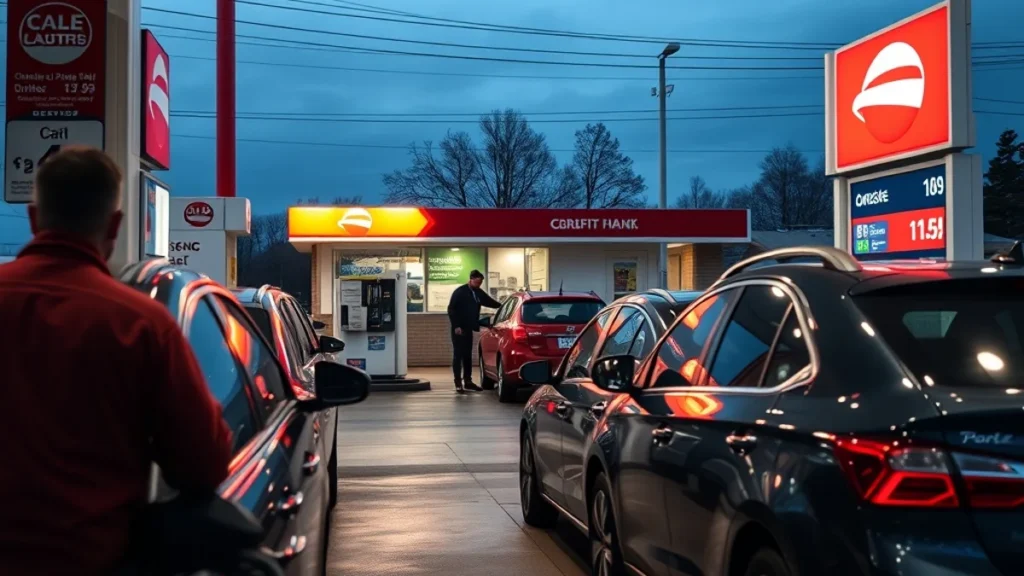
As gas prices soar to an average of $4.27 per gallon—up $1.23 from last year—automakers are witnessing a significant shift in consumer preferences. Hybrid vehicles are now capturing a record 16% of total vehicle sales, while electric vehicles (EVs) are experiencing a decline. This evolving landscape raises critical questions about the future of mobility and the role of different powertrains in an era of fluctuating fuel costs.
Fuel Economy and Performance: The Hybrid Advantage
With gas prices reaching unprecedented heights, the appeal of hybrid vehicles has surged. Hybrids combine traditional internal combustion engines with electric propulsion, offering drivers the best of both worlds: the convenience of gasoline and the efficiency of electric power. Models like the Toyota RAV4 Hybrid and Honda Accord Hybrid are leading the charge, boasting impressive fuel economy ratings that often exceed 50 miles per gallon. This efficiency not only alleviates the financial burden of high gas prices but also positions hybrids as a practical choice for consumers who may not yet be ready to transition fully to electric vehicles.
Moreover, hybrids provide a seamless driving experience, with powertrains designed to optimize performance based on driving conditions. The regenerative braking systems found in many hybrids enhance energy efficiency while delivering a responsive driving experience. As consumers become increasingly cost-conscious, the hybrid’s ability to deliver both fuel savings and performance is a compelling proposition that is hard to ignore.
Electric Vehicles: The Challenges of Adoption
While hybrids are thriving, the electric vehicle market is facing a conundrum. Despite significant advancements in battery technology and a growing number of models available, sales of EVs have slipped. Several factors contribute to this downturn, including the rising cost of raw materials for batteries, which has led to increased vehicle prices. For instance, the average price of a new EV has climbed to over $60,000, making them less accessible to the average consumer.
Additionally, the charging infrastructure, while expanding, still lags behind what is necessary to support widespread EV adoption. Range anxiety remains a significant barrier, particularly for consumers who rely on their vehicles for long-distance travel. The convenience of a gas station on nearly every corner continues to favor traditional vehicles, leaving EVs to compete in a landscape where charging options are still developing.
Consumer Sentiment: The Shift Towards Practicality
Consumer sentiment is shifting towards practicality and value, which is reflected in the sales data. The allure of zero-emission vehicles is tempered by the realities of everyday driving needs and economic pressures. As families and individuals reassess their budgets in light of rising fuel prices, hybrids present a more immediate solution without the commitment of full electrification.
Moreover, government incentives for hybrids, such as tax credits and rebates, are still in place, making them an attractive option for budget-conscious buyers. The recent Inflation Reduction Act has also bolstered hybrid sales by extending tax credits for plug-in hybrids, further enhancing their appeal. As consumers become more informed about the long-term savings associated with hybrid vehicles, the trend towards hybrid adoption is likely to continue.
Market Dynamics: Competition and Innovation
The automotive market is witnessing a dynamic shift as manufacturers respond to changing consumer preferences. Major players like Ford and General Motors are investing heavily in hybrid technology, alongside their EV initiatives. The Ford Maverick, a compact hybrid pickup, has garnered significant attention, reflecting a broader trend towards versatile, fuel-efficient vehicles that cater to diverse consumer needs.
In contrast, traditional automakers face increasing pressure from tech companies entering the automotive space. Tesla remains a dominant force in the EV market, but new entrants like Rivian and Lucid Motors are pushing the envelope with innovative designs and performance metrics. This competition is driving advancements in both hybrid and electric technologies, as manufacturers strive to differentiate their offerings in a crowded marketplace.
Total Cost of Ownership: Evaluating Long-Term Value
When considering the total cost of ownership (TCO), hybrids often emerge as the more economical choice in the current climate. While the upfront costs may be higher than traditional vehicles, the savings on fuel and maintenance can offset this initial investment over time. Additionally, hybrids typically have lower depreciation rates compared to their EV counterparts, which can lose value more rapidly due to the fast-paced advancements in battery technology.
Furthermore, insurance costs for hybrids can be lower, as many insurers recognize the reduced risk associated with the technology. As consumers weigh their options, the long-term financial benefits of hybrid vehicles become increasingly apparent, especially in an environment where gas prices are volatile and electric vehicle incentives may fluctuate.
In conclusion, the automotive landscape is evolving rapidly as gas prices rise and consumer preferences shift. Hybrids are carving out a significant share of the market, driven by their practicality and cost-effectiveness. Meanwhile, electric vehicles must navigate a complex array of challenges to maintain their appeal. As the industry adapts to these changes, the future of mobility will likely be defined by a diverse range of powertrains, each offering unique advantages to meet the needs of an ever-changing consumer base.
To stay ahead of electric vehicle market shifts, smart ownership tips, and automotive insurance strategies, continue reading our Auto & Mobility section below.