
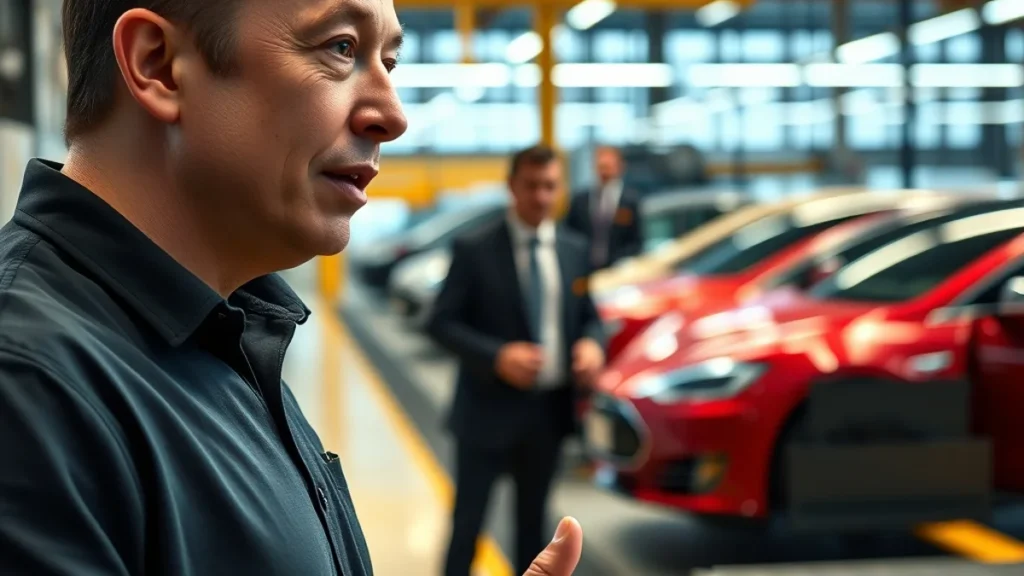
In a surprising strategic pivot, Tesla CEO Elon Musk announced plans to wind down Cybertruck production by 2027, reallocating resources to ramp up the production of Cybercab robotaxis at the company’s Texas factory. This decision reflects Tesla’s evolving vision for urban mobility and highlights the growing importance of autonomous vehicle technology in the company’s future.
Reassessing the Cybertruck’s Role in Tesla’s Portfolio
The Cybertruck, unveiled in late 2019 with its polarizing design and ambitious specifications, was initially positioned as a game-changer in the electric pickup segment. However, as production finally began in 2023, the market landscape has shifted dramatically. The demand for electric vehicles (EVs) continues to surge, but the focus is increasingly on urban mobility solutions that prioritize efficiency and sustainability. Musk’s decision to scale back Cybertruck production underscores a critical reassessment of Tesla’s product lineup in light of these emerging trends.
While the Cybertruck boasts impressive features—such as a robust stainless-steel exoskeleton, a tri-motor all-wheel-drive system, and a projected range exceeding 500 miles—its market entry has been marred by delays and production challenges. As Tesla grapples with the complexities of scaling up manufacturing, particularly at its Gigafactory in Texas, the shift towards Cybercab production signals a strategic realignment with consumer preferences leaning towards ride-sharing and autonomous driving solutions.
Cybercab: The Future of Urban Mobility
Tesla’s pivot to Cybercab production is a clear acknowledgment of the growing demand for autonomous ride-hailing services. As cities become more congested and environmental concerns mount, the need for efficient, shared transportation solutions is more pressing than ever. The Cybercab, designed to operate without a driver, represents Tesla’s vision for a future where personal vehicle ownership may become less prevalent.
The Cybercab is expected to leverage Tesla’s extensive experience in battery technology and software development, incorporating advanced AI systems for navigation and passenger safety. By focusing on this segment, Tesla aims to capitalize on the projected growth of the autonomous vehicle market, which is anticipated to reach $60 billion by 2030. This strategic shift not only positions Tesla at the forefront of the autonomous mobility revolution but also aligns with broader societal trends towards sustainability and reduced carbon footprints.
Production Capacity and Technological Innovations
Scaling back Cybertruck production will allow Tesla to optimize its manufacturing processes and invest in the technological advancements necessary for the Cybercab. The Texas Gigafactory, which has already been a hub for innovation, will play a pivotal role in this transition. By reallocating resources, Tesla can enhance its production capabilities, focusing on automation and efficiency to meet the anticipated demand for Cybercabs.
Tesla’s commitment to vertical integration means that it will continue to develop its own battery technology, which is crucial for the performance and cost-effectiveness of the Cybercab. Innovations in battery chemistry, such as the transition to 4680 cells, promise to deliver higher energy density and lower costs, making electric ride-hailing services more viable. Furthermore, advancements in AI and machine learning will enable Tesla to refine its autonomous driving algorithms, ensuring that the Cybercab can navigate complex urban environments safely and efficiently.
Market Dynamics: Competition and Consumer Sentiment
As Tesla shifts its focus towards Cybercab production, it faces increasing competition from established automakers and new entrants in the electric and autonomous vehicle markets. Companies like Waymo, Cruise, and traditional automakers such as Ford and GM are investing heavily in autonomous technology and ride-sharing platforms. This competitive landscape necessitates that Tesla not only innovate but also effectively communicate the unique value proposition of its Cybercab.
Consumer sentiment is also evolving, with many potential buyers expressing interest in shared mobility solutions over traditional vehicle ownership. This shift is particularly pronounced among younger generations, who prioritize access over ownership. By positioning the Cybercab as a sustainable and convenient alternative to personal vehicles, Tesla can tap into this growing market segment and solidify its leadership in the EV space.
Financial Implications and Long-Term Strategy
The decision to wind down Cybertruck production in favor of Cybercab development carries significant financial implications for Tesla. While the Cybertruck was anticipated to generate substantial revenue, the potential for recurring income through ride-hailing services could prove more lucrative in the long run. By investing in the Cybercab, Tesla is not just responding to current market demands but is also laying the groundwork for a sustainable business model that capitalizes on the shift towards shared mobility.
Additionally, the transition may allow Tesla to optimize its supply chain and reduce production costs, ultimately benefiting its bottom line. As the company continues to innovate and adapt to changing market dynamics, its ability to pivot strategically will be crucial in maintaining its competitive edge in the rapidly evolving automotive landscape.
To stay ahead of electric vehicle market shifts, smart ownership tips, and automotive insurance strategies, continue reading our Auto & Mobility section below.