
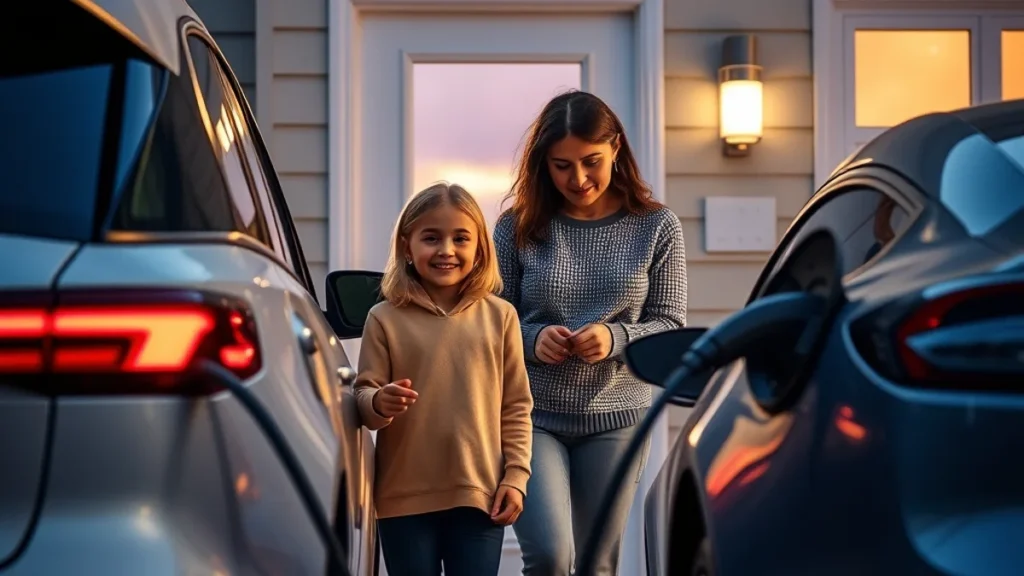
In a groundbreaking survey conducted in 2026, a staggering 94% of all-electric vehicle (EV) households reported significantly lower running costs compared to their internal combustion engine (ICE) counterparts. This revelation underscores the growing economic viability of EV ownership, driven by advancements in battery technology, charging infrastructure, and government incentives.
Revolutionizing the Cost Equation: A Closer Look at EV Economics
The financial landscape for EV owners has evolved dramatically over the past few years. With the average cost of electricity per mile driven being substantially lower than gasoline, households are witnessing a paradigm shift in their transportation expenses. According to the U.S. Department of Energy, the average cost of electricity for EVs stands at approximately $0.04 per mile, compared to around $0.14 for gasoline vehicles. This translates to an annual savings of thousands of dollars for families who have made the switch to electric.
Moreover, the depreciation rates of EVs are also beginning to stabilize, thanks to increasing consumer acceptance and the expanding used EV market. As manufacturers ramp up production and improve battery longevity, the resale value of electric vehicles is expected to rise, further enhancing the total cost of ownership (TCO) for EV adopters.
Charging Infrastructure: The Backbone of EV Adoption
The expansion of charging infrastructure is a critical factor in the growing popularity of all-EV households. As of 2026, the number of public charging stations has more than tripled since 2020, making it increasingly convenient for EV owners to recharge their vehicles. Fast-charging networks, such as Tesla’s Supercharger and Electrify America’s growing footprint, have reduced charging times to as little as 30 minutes for long-range models, alleviating range anxiety and making long-distance travel feasible.
Additionally, home charging solutions have become more accessible and affordable. Many utility companies now offer incentives for installing home charging stations, allowing EV owners to charge their vehicles overnight at lower rates. This not only enhances convenience but also contributes to the overall reduction in running costs.
Battery Technology: The Heart of Efficiency and Affordability
At the core of the EV revolution is the rapid advancement in battery technology. The introduction of solid-state batteries and improved lithium-ion technology has led to significant increases in energy density, resulting in longer ranges and faster charging times. For instance, leading manufacturers are now producing EVs capable of exceeding 400 miles on a single charge, making them competitive with traditional vehicles in terms of range.
Furthermore, the decreasing cost of battery production has been a game-changer. According to BloombergNEF, the average cost of lithium-ion batteries has dropped by over 80% since 2010, allowing manufacturers to offer more affordable EV models without sacrificing performance. This trend is expected to continue, making EVs even more accessible to the average consumer.
Government Incentives: Fueling the Transition to Electric Mobility
Government incentives play a pivotal role in encouraging the transition to electric mobility. In 2026, various federal and state programs provide substantial tax credits and rebates for EV purchases, significantly lowering the upfront costs. For example, the federal tax credit can offer up to $7,500 off the purchase price of qualifying electric vehicles, while many states offer additional incentives that can further reduce costs.
Moreover, as part of broader sustainability initiatives, numerous municipalities are investing in EV-friendly policies, such as reduced registration fees, access to carpool lanes, and exemptions from tolls. These incentives not only make EV ownership more attractive but also contribute to a growing cultural shift towards sustainable transportation.
Competitive Landscape: EVs vs. Traditional Vehicles
The competitive landscape for automotive manufacturers is rapidly changing as the demand for electric vehicles surges. Legacy automakers are investing billions in electrification strategies, with many pledging to phase out ICE vehicles entirely by the end of the decade. This shift is not only a response to consumer demand but also a recognition of the regulatory pressures aimed at reducing carbon emissions.
Brands like Ford, General Motors, and Volkswagen are launching comprehensive EV lineups, targeting various market segments from affordable compact cars to luxury SUVs. This diversification is crucial as it allows consumers to find an electric vehicle that fits their lifestyle and budget, further driving adoption rates.
In contrast, new entrants like Rivian and Lucid Motors are carving out niches in the premium EV market, offering high-performance models that challenge traditional luxury brands. As competition intensifies, consumers can expect more innovation, better features, and improved pricing across the board.
As we look toward the future, the landscape of automotive mobility is poised for transformation. The overwhelming majority of all-EV households reporting lower running costs signals a significant shift in consumer sentiment, paving the way for electric vehicles to become the norm rather than the exception.
To stay ahead of electric vehicle market shifts, smart ownership tips, and automotive insurance strategies, continue reading our Auto & Mobility section below.