
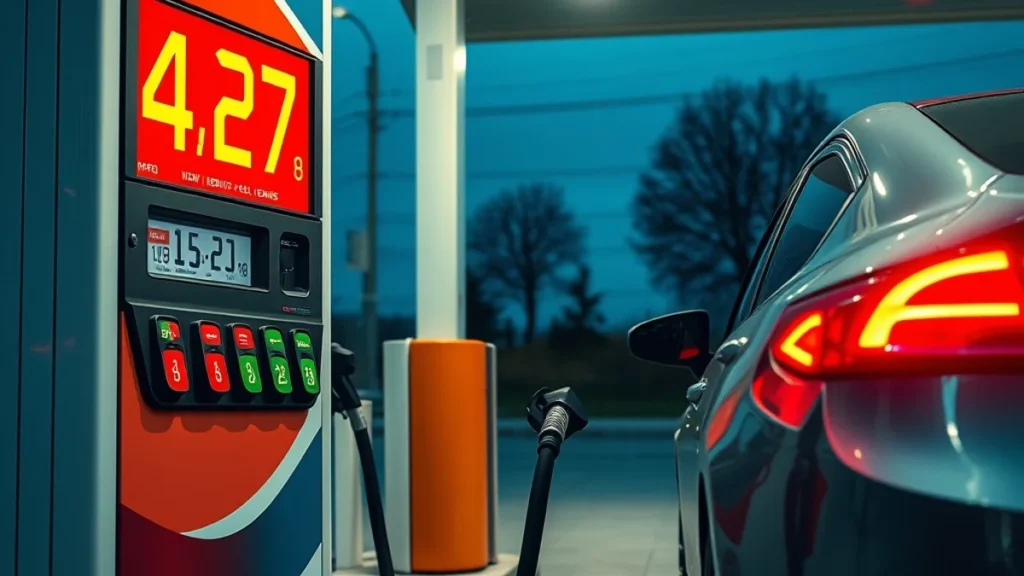
As gas prices soar to $4.27 a gallon—up $1.23 from last year—American consumers are increasingly gravitating towards hybrid vehicles, which now account for a record 16% of total automotive sales. This shift comes at a time when electric vehicle (EV) sales are experiencing a notable decline, raising questions about the future of sustainable mobility in a landscape dominated by fluctuating fuel costs.
Hybrid Vehicles: The New Mainstream Choice
With the average price of gasoline hitting record highs, hybrid vehicles have emerged as a practical solution for consumers seeking to balance fuel efficiency with traditional driving experiences. Hybrids, which combine an internal combustion engine with an electric motor, offer an appealing middle ground for those hesitant to fully commit to electric vehicles. The surge in hybrid sales reflects a broader trend where consumers prioritize immediate cost savings and convenience over long-term environmental considerations.
According to recent data, hybrid sales have surged by 25% in the past year, with models like the Toyota RAV4 Hybrid and Honda CR-V Hybrid leading the charge. These vehicles not only provide impressive fuel economy—often exceeding 40 miles per gallon—but also retain the familiar driving dynamics that many consumers prefer. As gas prices remain volatile, hybrids are positioned as a sensible choice for families and commuters alike, offering a blend of efficiency and versatility.
Electric Vehicle Sales: A Slippery Slope
In stark contrast to the hybrid boom, electric vehicle sales have seen a decline, with a reported drop of 10% in the last quarter alone. Factors contributing to this downturn include high upfront costs, limited charging infrastructure, and consumer apprehension about battery range and longevity. While brands like Tesla and Ford continue to innovate, the reality is that many potential buyers are deterred by the challenges associated with fully electric ownership.
Moreover, the recent expiration of federal EV tax credits has further complicated the landscape. Many consumers who might have considered an EV are now weighing the financial implications of their purchase more critically. As a result, the allure of hybrids—often eligible for state incentives and tax breaks—becomes even more pronounced. The current market dynamics suggest that while EVs may represent the future, hybrids are capturing the present.
Fuel Economy Meets Performance: The Engineering Behind Hybrids
The engineering advancements in hybrid technology have significantly contributed to their appeal. Modern hybrids are not just about fuel efficiency; they also offer robust performance metrics that rival traditional gasoline vehicles. For instance, the latest Toyota Prius Prime boasts a combined output of 121 horsepower, achieving 54 mpg in the city and 133 mpg on the highway, making it a formidable contender in both performance and efficiency.
Furthermore, manufacturers are investing heavily in improving the driving experience. Features such as regenerative braking, which captures energy during deceleration, and advanced battery management systems enhance both efficiency and performance. These innovations not only improve fuel economy but also provide a more engaging driving experience, appealing to enthusiasts who may have previously dismissed hybrids as underwhelming.
Cost of Ownership: The Hybrid Advantage
When evaluating the total cost of ownership (TCO), hybrids present a compelling case. While the initial purchase price may be higher than that of conventional vehicles, the long-term savings on fuel and maintenance can offset this difference. With gas prices remaining high, the savings from improved fuel economy can be substantial. For example, a driver who switches from a gas guzzler to a hybrid could save upwards of $1,000 annually on fuel alone, depending on driving habits and local gas prices.
Additionally, hybrids often come with lower maintenance costs compared to their gasoline counterparts. The regenerative braking system reduces wear on brake components, and the electric motor can alleviate stress on the internal combustion engine, leading to longer intervals between service appointments. When combined with state and local incentives, the financial benefits of hybrid ownership become increasingly attractive in today’s economic climate.
Market Dynamics: The Battle for Consumer Attention
The automotive market is witnessing a fascinating tug-of-war between hybrids and EVs, each vying for consumer attention amidst rising fuel prices and environmental concerns. Automakers are responding by diversifying their offerings, with many brands introducing new hybrid models alongside their electric lineups. This strategy not only caters to a broader audience but also allows manufacturers to hedge against the uncertainties of the EV market.
For instance, Ford’s recent launch of the F-150 Lightning has generated significant buzz, yet the company continues to invest in hybrid variants of its best-selling trucks. Similarly, Toyota, a pioneer in hybrid technology, is doubling down on its hybrid offerings while also exploring hydrogen fuel cell technology as a potential alternative. This multifaceted approach underscores the complexity of consumer preferences and the need for automakers to adapt to shifting market dynamics.
As consumers navigate their options, the decision-making process is influenced by a myriad of factors, including environmental impact, cost, and convenience. While EVs may represent the future of transportation, hybrids are carving out a significant niche in the present market, appealing to those who prioritize practicality without sacrificing performance.
In conclusion, the current landscape of automotive sales reveals a clear trend: as gas prices rise, hybrids are becoming the go-to choice for many consumers, while electric vehicles face challenges that may hinder their growth. This shift highlights the importance of understanding consumer needs and preferences in an ever-evolving market. As the automotive industry continues to innovate and adapt, the balance between hybrid and electric technologies will play a crucial role in shaping the future of mobility.
To stay ahead of electric vehicle market shifts, smart ownership tips, and automotive insurance strategies, continue reading our Auto & Mobility section below.