
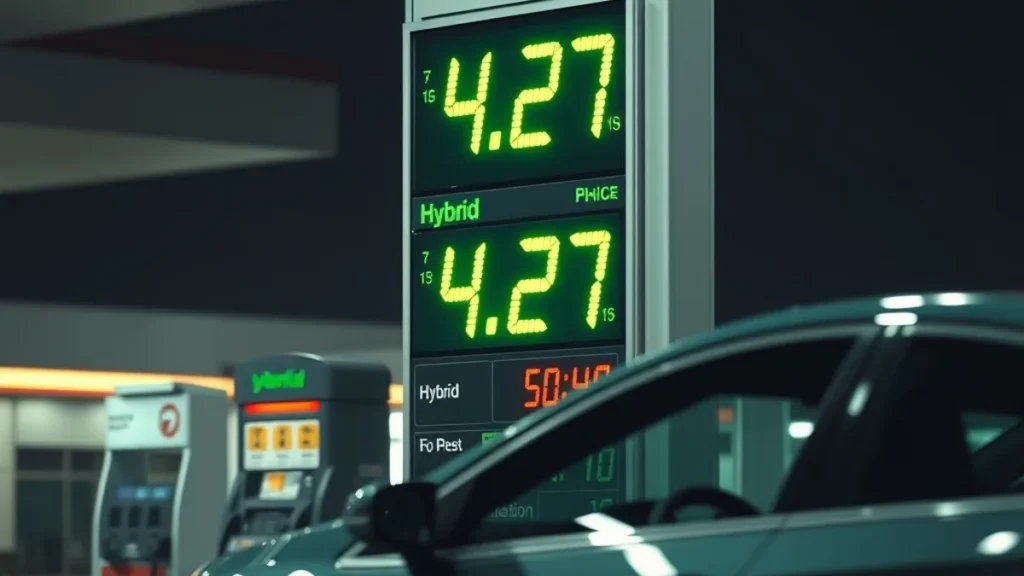
The surge in gas prices to $4.27 a gallon, marking a $1.23 increase over the past year, has catalyzed a significant shift in consumer preferences, pushing hybrid vehicles to a record 16% of automotive sales. Meanwhile, electric vehicles (EVs) are experiencing a slight decline, prompting a reevaluation of the automotive landscape as buyers seek more economical alternatives without sacrificing performance.
Hybrid Vehicles: The New Mainstream Choice
As fuel prices continue to rise, hybrid vehicles are emerging as a practical solution for consumers looking to balance fuel efficiency with traditional driving experiences. The latest data indicates that hybrid sales have surged, capturing a notable 16% of the market share, a record high that underscores the changing dynamics of consumer behavior. This shift is not merely a reaction to high fuel prices; it reflects a broader acceptance of hybrids as a viable alternative to both gasoline and fully electric vehicles.
Manufacturers have responded to this trend by expanding their hybrid offerings, with models like the Toyota RAV4 Hybrid and Honda Accord Hybrid leading the charge. These vehicles not only offer impressive fuel economy but also deliver robust performance, making them appealing to a wide range of buyers. The integration of advanced powertrains that combine gasoline engines with electric motors allows for seamless transitions between power sources, enhancing both efficiency and driving pleasure.
The EV Market: A Temporary Setback or a Fundamental Shift?
While hybrids are thriving, the EV market is facing headwinds, with sales experiencing a slight dip. Factors contributing to this trend include the rising cost of raw materials for batteries, which has led to increased vehicle prices, and a lack of widespread charging infrastructure in many regions. Additionally, the initial allure of EVs has been tempered by concerns over range anxiety and charging times, particularly as consumers grapple with the realities of everyday commuting amidst fluctuating fuel prices.
Despite these challenges, manufacturers are not backing down. Tesla, Ford, and General Motors continue to invest heavily in EV technology and infrastructure, aiming to overcome these barriers. However, the current economic climate is prompting consumers to reassess their choices, leading many to consider hybrids as a more immediate solution to rising fuel costs.
Fuel Economy: The Driving Force Behind Consumer Decisions
With gas prices soaring, fuel economy has become a paramount concern for car buyers. Hybrids typically offer significantly better miles per gallon (MPG) ratings compared to traditional gasoline vehicles, making them an attractive option for budget-conscious consumers. For instance, the Toyota Prius boasts an impressive 56 MPG combined, while many new hybrid SUVs are now achieving upwards of 40 MPG, a stark contrast to the average 25 MPG of conventional vehicles.
This emphasis on fuel economy is not just about saving money at the pump; it also reflects a growing awareness of environmental issues. Consumers are increasingly looking for vehicles that minimize their carbon footprint, and hybrids provide a compelling middle ground. As such, the demand for hybrids is likely to persist even if gas prices stabilize, as buyers seek to future-proof their investments against potential price hikes.
Incentives and Total Cost of Ownership: A Comparative Analysis
When evaluating the total cost of ownership (TCO), hybrids often emerge as a more financially viable option compared to EVs, especially in the current economic climate. While EVs may benefit from federal tax credits and incentives, the higher upfront costs associated with battery technology can deter potential buyers. In contrast, hybrids typically have lower purchase prices and still qualify for certain incentives, making them more accessible to a broader range of consumers.
Moreover, maintenance costs for hybrids are generally lower than those for traditional vehicles, thanks to fewer moving parts in their powertrains. This can lead to significant long-term savings, further enhancing their appeal. As consumers become more financially savvy, they are increasingly considering TCO as a critical factor in their purchasing decisions, which may continue to favor hybrids in the near term.
Market Dynamics: Competition and Consumer Preferences
The automotive market is witnessing a fierce competition between hybrid and electric vehicles, with each segment vying for consumer attention. While hybrids are enjoying a resurgence, EV manufacturers are not standing still. Companies are innovating rapidly, introducing models that promise longer ranges, faster charging times, and enhanced performance. The Ford Mustang Mach-E and the Rivian R1T are prime examples of how EVs are evolving to meet consumer demands.
However, the current economic landscape suggests that hybrids may hold a competitive edge for the foreseeable future. As consumers prioritize fuel efficiency and affordability, hybrids are positioned to capture a significant share of the market. This rivalry will likely drive further advancements in both hybrid and electric technologies, ultimately benefiting consumers through improved vehicles and more choices.
In conclusion, the current surge in gas prices has catalyzed a remarkable shift in consumer preferences toward hybrid vehicles, pushing them to a record 16% of sales. While electric vehicles face challenges, the automotive landscape is evolving, and the competition between hybrids and EVs is intensifying. As manufacturers continue to innovate and respond to consumer demands, the future of mobility remains dynamic and full of potential.
To stay ahead of electric vehicle market shifts, smart ownership tips, and automotive insurance strategies, continue reading our Auto & Mobility section below.